
For years, marketers have been asked to do a fairly simple job: understand where their audience spends time, show up there in a way that matters, and make it easy for people to take the next step.
That hasn't changed.
What has changed is the environment around it. Organic media planning is no longer just an SEO exercise with a social calendar bolted on. It now sits across search engines, short-form video. Marketplaces, communities, review platforms, and AI interfaces that increasingly help people discover, compare, and choose before they ever land on a brand's website.
Herd's own 2026 Shopify Growth Playbook already points to this shift: user journeys are non-linear, discovery is fragmented, validation happens across communities and marketplaces, and AI is starting to compress parts of research and evaluation.
In the UK, adults now spend an average of four and a half hours a day online and use 41 apps a month. Google Search still reaches four in five adults, but Ofcom says roughly 30% of searches now show AI overviews.
while ChatGPT UK visits in the first eight months of 2025 reached 1.8 billion, up sharply from the same period in 2024. That tells us something important: discovery has not moved from one place to another. It has spread across more surfaces, more formats, and more interfaces.
So what are the new principles?
- Audience Behaviour
- Organic Touchpoints
- Machine Readability
- Community Media
- Topic Systems
- Product Page
- Broaden Measurement
- Operating Model
- Wrapping Up
1. Plan around audience behaviour, not channel definitions
The old planning model encouraged marketers to think in silos: SEO over here, social over there, PR somewhere else. But the truth is that was always more representative of marketing team or agency structures and incentivisation, not how people in the real world, with their messy, drawn-out, spontaneous, pinball machine-like actually discover information and make decisions about things.
A shopper might first notice a product on TikTok. Search for it on Google, validate it through reviews or forums, compare options in ChatGPT, and then buy either on a brand site, a marketplace or inside a platform.
TikTok says billions of searches now happen on its platform every day, up more than 40% year on year, while Google continues to push Search towards a more conversational experience through AI Overviews and AI Mode. Search, in other words, is becoming a behaviour, not a destination.
2. Give each organic touchpoint a job to do
Not every touchpoint needs to close the sale and measuring their effects purely on that basis is like judging a fish on its ability to climb a tree (as the proverb usually misattributed to Albert Einstein goes). Some exist to make the brand discoverable. Some exist to build memory. Some exist to answer objections. Some exist to provide proof. That is why the most useful organic media plans now separate touchpoints by role: discoverability, validation, comparison, and conversion.
A creator video might create curiosity. A category page might capture intent. A review profile might remove doubt. A product page might finish the job. While we can't expect all our communications to be delivered or consumed in the exact moment. An audience is in that specific mindset we can increase the chances by distributing information that solves for those phases – in essence building for tomorrow or solving for today.
3. Optimise for machine readability as well as human readability
One of the biggest changes in 2026 is that organic visibility increasingly depends on how well machines can understand your brand, products. and propositions.
Google says free product listings can appear across Search, Maps, Images, Lens, YouTube, Gemini, the Shopping tab, and Business Profile modules. Its documentation also makes clear that product structured data can make pages eligible for merchant listing experiences on Google Search, including shopping knowledge panels, Google Images, popular product results, and product snippets, with fields such as price, availability, shipping and returns.
Google is equally clear that structured data improves understanding and eligibility but does not guarantee enhanced results. OpenAI, meanwhile, says ChatGPT shopping results rely on merchant and product metadata from third parties or merchants directly, and that merchants can provide direct feeds to keep product information more current.
That means organic media planning now includes the unglamorous but essential work: clean product data, consistent entity signals, crawlable templates, accurate shipping and returns information, clear on-site copy, and content structures that machines can interpret confidently as well as humans can read easily.
4. Community is not adjacent to organic media. It is organic media
For years, many brands treated communities, reviews, and creator conversation as a side-effect of marketing. In 2026, that is the wrong way round.
Herd's playbook frames community validation and cross-platform corroboration as central to the modern customer journey. That feels especially relevant now because people increasingly want proof from other people, not just polished messaging from brands.

TikTok's own product and business updates point in the same direction: it is investing in search-led discovery, local discovery, and community-driven commerce because attention, conversation and action increasingly happen in the same environment.
The implication is simple. Reviews are media. Comments are media. Creator explanations are media. Reddit threads, YouTube walkthroughs, community Q&As and customer photos are all part of the organic plan because they influence how to understand a brand long before a conversion event takes place.
5. Build topic systems, not isolated campaigns
AI interfaces are changing the shape of questions. People are asking longer, more specific, more comparative things. They are refining as they go. They are not always starting with a succinct query and clicking ten blue links.
Google says people are using AI Mode for longer. More complex and follow-up-heavy queries. TikTok launched Creator Search Insights specifically to help creators understand what people are searching for on-platform and where content gaps exist.
OpenAI's shopping research and product discovery experiences are built around iterative comparison, constraints, and clarification. The lesson for organic planning is clear: stop thinking only in terms of single assets and start thinking in systems of questions, answers, and proof.
For eCommerce brands, it means mapping the recurring questions buyers ask at each stage of the journey, then expressing them across formats: collection copy, PDP content, FAQs, comparison pages, help content, short-form video, creator briefs, review requests, and PR angles. One question should rarely live in one place. It should exist in the places your audience actually uses to discover and evaluate.
6. Treat the product page as media, not just destination
This is particularly important for Shopify brands.
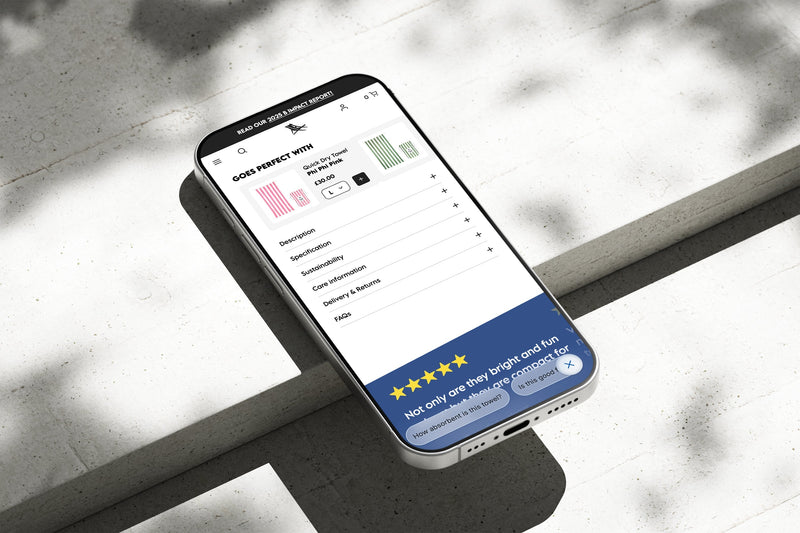
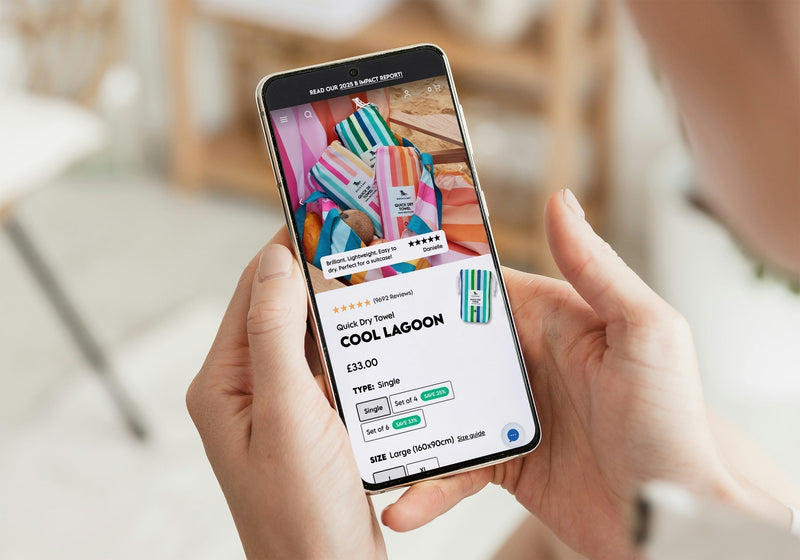
The PDP is no longer just the place where bottom-funnel traffic converts. It is also a proof asset, a search asset, a comparison asset and increasingly a source of structured information for platforms and AI tools.
Google's merchant listing documentation shows just how much product data can travel into search experiences, and Herd's playbook makes the point well that product pages and supporting content should be treated as their own conversion journeys, with objections handled early and reassurance made visible.
The best organic media plans therefore connect content and commerce properly: category pages to PDPs, PDPs to reviews, reviews to FAQs, FAQs to customer service content, and all of it supported by clear delivery, returns, pricing, and trust signals. In 2026, content strategy and merchandising strategy are increasingly the same conversation.
7. Broaden what you measure
If discovery is now distributed, measurement has to be too.
Google recommends monitoring Search performance and the Merchant Listings and Product Snippets reports in Google Search Console to understand how product content is appearing and whether structured data issues are limiting visibility. Herd's playbook also makes a crucial point that many marketers still need to hear: attribution is imperfect, and there is still no clean, universal way to measure "AI visibility" with precision.
That means the scorecard for organic media planning in 2026 should be broader than rankings and sessions. It should include rich result coverage, branded demand, review volume and quality, creator mentions, referral quality, assisted conversions, new customer acquisition and the health of your underlying content and product data. The aim is not to find one magic metric. It is to build a more truthful picture of visibility and commercial contribution.
8. Organic planning is now an operating model
Perhaps the biggest change of all is organisational, not technical.
Organic performance is now shaped by more than an SEO or content team. Merchandisers control product data. Developers control crawlability and structured data. PR shapes third-party citations. Social teams shape discoverability on platforms. CX teams surface the questions customers actually ask. Reviews and loyalty teams influence the proof layer.
OpenAI's shopping documentation, Google's structured data guidance and TikTok's search and local discovery tools all point to the same conclusion: visibility is increasingly the output of joined-up operations, not isolated outputs, delivery, and publishing.
9. Wrapping it up
The new principles of organic media planning in 2026 are not really about chasing shiny objects. They are about returning to a more complete view of marketing. The fundamentals are old: know your audience, understand their needs, show up where they spend attention, earn trust, reduce friction, and make the next step obvious. What is new is the number of places where that work now has to happen.
Search is no longer only search engines. Discovery is no longer only social. Product evaluation is no longer only on your website. And increasingly, AI interfaces sit across all three. The brands that will win are not the ones trying to be everywhere. They will be the ones that are clear about where they need to be, what role each touchpoint should play, and how content, proof, and data work together so the brand can travel with the customer across the whole journey.
For more insights into how organic media planning and eCommerce are evolving, download our Shopify Growth Playbook , co-authored by our team of experts at Herd, to get ahead of your competitors in 2026 and beyond. Or reach out to the team today, if you are a brand looking to improve Shopify SEO performance in 2026.