
Increasing traffic to your Shopify store is expensive. Between paid advertising costs, SEO investment, and ongoing marketing activity, acquiring new customers often requires significant effort and budget. That's why the most successful Shopify brands focus not only on attracting customers but also on maximising the value of every order.
As we highlight in our 2026 Shopify Growth Playbook, upselling and cross-selling are two of the most effective strategies for increasing Average Order Value (AOV), improving customer experience, and driving more revenue without needing more traffic.
In this detailed guide, I’ll explain the difference between upselling and cross-selling, why they matter, and how to effectively implement them in Shopify.
- What’s the Difference Between Upselling and Cross-Selling?
- Why Upselling and Cross-Selling Matter
- The 7 Best Places to Upsell and Cross-Sell in Shopify
- Avoid 4 Common Upselling Mistakes
- Measuring Success
- How Herd Can Help with Upselling and Cross-Selling
1. What’s the Difference Between Upselling and Cross-Selling?
Although upselling and cross-selling are often used interchangeably, they’re distinctly different eCommerce tactics.
Upselling
Upselling encourages customers to purchase a higher-value version of the product they're already considering. The goal is to increase the value of the primary purchase while delivering additional benefits to the customer.
Examples:
• Choosing a premium skincare bundle instead of a single product
• Upgrading from a 500ml bottle to a 1-litre option
• Selecting a higher-specification product model
Cross-Selling
Cross-selling involves recommending complementary products alongside the item being purchased. Done correctly, cross-selling enhances the customer's purchase rather than feeling like an additional sales push.
Examples:
• Recommending memory cards when buying a camera
• Suggesting matching accessories with clothing purchases
• Offering a laptop sleeve alongside a laptop
2. Why Upselling and Cross-Selling Matter
According to Shopify, increasing your average order value can have a significant impact on profitability, as you're generating more revenue from customers you've already acquired. Even small increases in AOV can lead to substantial growth over time. For example, increasing an average order value from £75 to £85 across 10,000 annual orders creates an additional £100,000 in revenue.
Benefits include:
• Increased revenue per customer
• Improved customer lifetime value (CLV)
• Better return on advertising spend (ROAS)
• More efficient customer acquisition costs
• Enhanced customer experience through relevant recommendations
3. The 7 Best Places to Upsell and Cross-Sell in Shopify
Many Shopify merchants focus solely on the cart page, but successful upselling opportunities exist throughout the customer journey.
1. Product Pages
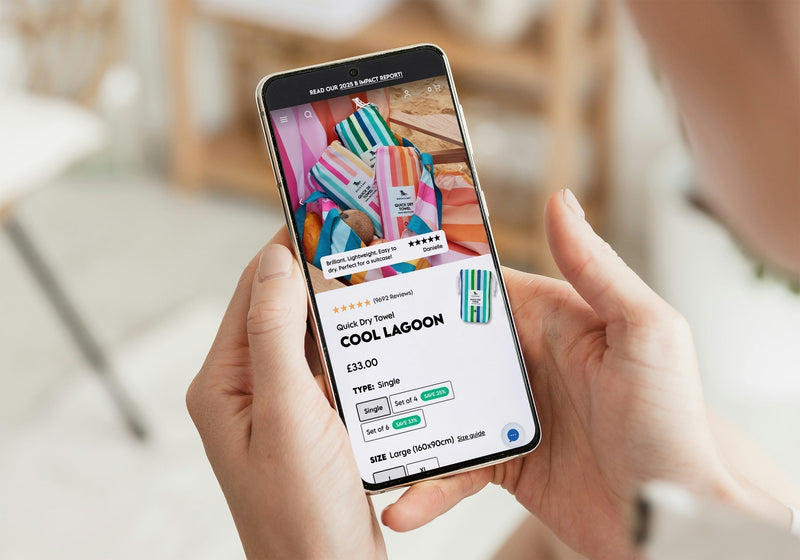
Product pages are often the highest-converting location for upsell and cross-sell opportunities. Effective product page upsells can include premium product upgrades and bundles, larger pack sizes as well as subscription options.
For example, a coffee brand could offer:
• 250g Bag (£10)
• 500g Bag (£18)
• 1kg Bag (£32)
By clearly highlighting the savings, customers are naturally guided toward larger purchases.
Effective product page cross-sells can include frequently bought together products, matching accessories, and “Complete the look” recommendations. The key to cross-selling is relevance. Recommendations should feel helpful, not random.

2. Cart Page
The cart is where purchase intent is highest, making it an excellent location for increasing basket value. Avoid overwhelming customers with too many options though, as this can reduce conversion rates. Best practice is to offer low-friction add-ons such as:
• Gift wrapping
• Extended warranties
• Accessories
• Consumables
• Protection plans
For example, a customer purchasing running shoes might see recommendations for running socks, hydration packs, or performance insoles, and purchase items that match their requirements.
3. Cart Drawers and Slide-Out Carts
Modern Shopify stores frequently use slide-out carts instead of dedicated cart pages. A particularly effective tactic is using a progress bar as this encourages customers to add another item to reach the threshold. These provide ideal opportunities to:
• Display complementary products
• Promote bundle offers
• Show free shipping thresholds
• Highlight product upgrades
4. Checkout Extensions
For Shopify Plus merchants, Checkout Extensibility allows upsell opportunities during the checkout process. Because customers are already committed to purchasing, these smaller-value additions can achieve strong uptake. Popular tactics include:
• Product add-ons
• Shipping upgrades
• Insurance options
• Last-minute accessories

5. Post-Purchase Upsells
One of the most underutilised Shopify opportunities is the post-purchase upsell. These offers appear immediately after payment but before the thank-you page. The key advantage? Customers can accept the offer without needing to re-enter payment details and often generate high conversion rates because the customer has already committed to buying.
Examples include:
• Additional products at a discounted rate
• Product replenishment offers
• Accessory recommendations
• Bundle upgrades
6. Create Bundles That Customers Actually Want
Bundling combines upselling and cross-selling into a single offer. Rather than selling products individually, combining complementary products together, into a package, delivers clear value.
Common Bundle Types
Starter Bundles
Perfect for new customers.
Example:
• Moisturiser
• Cleanser
• Serum
Build Your Own Bundle
Allows customers to personalise their selection.
Example:
• Pick 3 T-shirts and save 15%
Premium Bundles
Encourages larger purchases while increasing perceived value.
Example:
• Laptop
• Sleeve
• Wireless Mouse
• USB Hub
All packaged at a slight discount compared to individual purchases.
7. Leverage Personalisation
Generic recommendations rarely perform as well as personalised ones. Shopify stores can use customer behaviour to surface more relevant products, such as:
• Browsing history
• Purchase history
• Collection affinity
• Product categories viewed
For example, a customer who regularly buys premium skincare products should receive different recommendations than a first-time visitor purchasing an entry-level item. The more personal the recommendation, the higher the likelihood of conversion.

4. Avoid 4 Common Upselling Mistakes
Many upselling strategies fail because they're too aggressive.
1. Irrelevant Recommendations
Showing unrelated products damages trust and reduces effectiveness. You always want to focus on contextual recommendations.
2. Too Many Offers
Customers experiencing decision fatigue are less likely to complete their purchase. You need to limit recommendations to a few high-quality suggestions.
3. Prioritising Revenue Over Experience
The best upsells solve a problem or improve the purchase, but if recommendations feel forced, customers are less likely to engage.
4. Ignoring Mobile Users
Most Shopify stores receive most of their traffic from mobile devices. You need to ensure upsell components are fast-loading, touch-friendly, and non-intrusive.
5. Measuring Success
The five key metrics you need to track and evaluate upsell and cross-sell strategy are:
1. Average Order Value (AOV)
The primary metric for measuring success.
2. Revenue Per Visitor (RPV)
Shows whether increased basket values are improving overall revenue.
3. Upsell Acceptance Rate
The percentage of customers accepting upsell offers.
4. Bundle Uptake
Measures the effectiveness of bundled products.
5. Conversion Rate
Monitor carefully to ensure upsell efforts aren't negatively impacting checkout completion.
How Herd Can Help with Upselling and Cross-Selling
Upselling and cross-selling shouldn't feel like sales tactics. The most effective Shopify stores treat them as a way to improve the customer experience by helping shoppers find products that add genuine value.
Whether you're implementing smart product recommendations, creating compelling bundles, introducing post-purchase offers, or using free shipping incentives, the key is relevance. When recommendations are timely, contextual, and customer-focused, increasing average order value becomes a natural outcome rather than a hard sell.
Successful upselling and cross-selling tactics in Shopify is one of the many topics covered in our 2026 Shopify Growth Playbook. Containing detailed insights from our in-house experts and active Shopify merchants, our Shopify Growth Playbook allows eCommerce brands to make smarter and more confident decisions, shaping their growth in the future. Set your Shopify store up for long-term success by downloading your copy today.